Edelstahlbehälter Anlagenbau & Engineering Projekte in Pharma, Kosmetik & Biotech
Setzen Sie als Projektierer-Planer neue Standards in Ihren Projekten mit innovativen Lösungen von BOLZ INTEC
- Projektpartner für Engineering-Unternehmen: Als Projektpartner liefern wir Projektierern und Planern Edelstahlbehälter für Anlagenbau, technischer Beratung, Konstruktion und eine zuverlässige Umsetzung über alle Projektphasen hinweg.
- Sichere Lösungen für sensible Prozesse: Unsere Edelstahlbehälter, Apparate und Sonderkonstruktionen sind für hygienische und regulierte Produktionsumgebungen ausgelegt und unterstützen GMP- sowie EHEDG-konforme Anlagenkonzepte.
- Individuell statt Standard: BOLZ INTEC fertigt kundenspezifische Edelstahlbehälter für Anlagenbau-Projekte, von Druckbehältern und Rührwerksbehältern bis zu komplexen Sonderkonstruktionen.
Ihr leistungsfähiger Projektpartner Anlagenbau Edelstahlbehälter
Wir entwickeln nach Kundenspezifikation Edelstahlbehälter Anlagenbau, Apparate und Sonderkonstruktionen. Für Engineering-Unternehmen, Projektierer und Planer realisieren wir Lösungen, die höchste Anforderungen an Hygiene, Materialqualität, Prozesssicherheit und Dokumentation erfüllen.
Besonders in Pharma, Spezialchemie, Kosmetik und Biotechnologie sind kundenspezifische Edelstahlbehälter ein entscheidender Faktor für stabile, sichere und wirtschaftliche Produktionsprozesse. Als leistungsstarker und zuverlässiger Projektpartner bringt BOLZ INTEC jahrzehntelange Erfahrung im Behälterbau, in der Verarbeitung hochwertiger Edelstähle und in der Umsetzung komplexer Projektanforderungen ein.
Unsere Lösungen im Anlagenbau erhöhen die Sicherheit von Produkt und Produktion und werden konsequent entlang von GMP- und EHEDG-Hygienic-Design-Richtlinien gefertigt. Sie sind damit prädestiniert für den Einsatz in sensiblen Prozessumgebungen.
Dass sich unser Know-how gerade in komplexen Projektphasen bewährt, zeigt die Vielfalt der bereits realisierten Sonderlösungen: etwa bei der Entwicklung von Produktionsbehältern zur Herstellung medizinischer Gewebe, die höchste Anforderungen an Sterilität und Materialbeschaffenheit stellen. Oder bei einem konischen Transfergebinde, das eine kontaminationsarme Entleerung verschiedenartiger Ausgangsbehälter ermöglicht – ideal für modulare Prozesse mit hoher Stoffvariabilität. Auch drucktragende Beschichtungsbehälter, spezielle Gasmodule zur Trocknung von Großgebinden sowie maßgeschneiderte AG Rhw-Behälter für den Umgang mit Laktose wurden in enger Zusammenarbeit mit erfahrenen Anlagenbauern und Engineering-Unternehmen erfolgreich umgesetzt.
Nicht zuletzt entstehen bei BOLZ INTEC Edelstahlfässer mit integrierten Mischarmen zur Lagerung viskoser Medien, wie Farben, sowie Kondenssammelbehälter, die im Produktionsprozess höchste Dichtigkeit und Medienverträglichkeit erfordern. Alle diese Lösungen sind Ausdruck eines pragmatischen, anwendungsorientierten Engineerings – mit einem klaren Ziel: unseren Kunden nachhaltige Prozesssicherheit, maximale Hygiene und wirtschaftliche Effizienz zu ermöglichen.
Customers in the most sensitive industries rely on stainless steel tanks, apparatus and structures from BOLZ INTEC
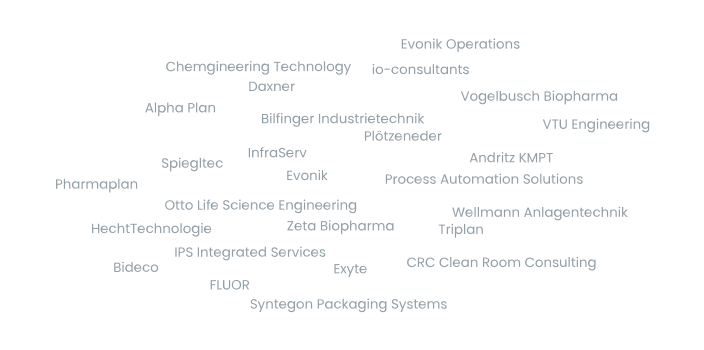
Namhafte Projektierer-Planer: Mit einigen haben wir bereits erfolgreich als Projektpartner Anlagenbau Edelstahlbehälter zusammengearbeitet
Produktportfolio für Anlagenbau-Projekte
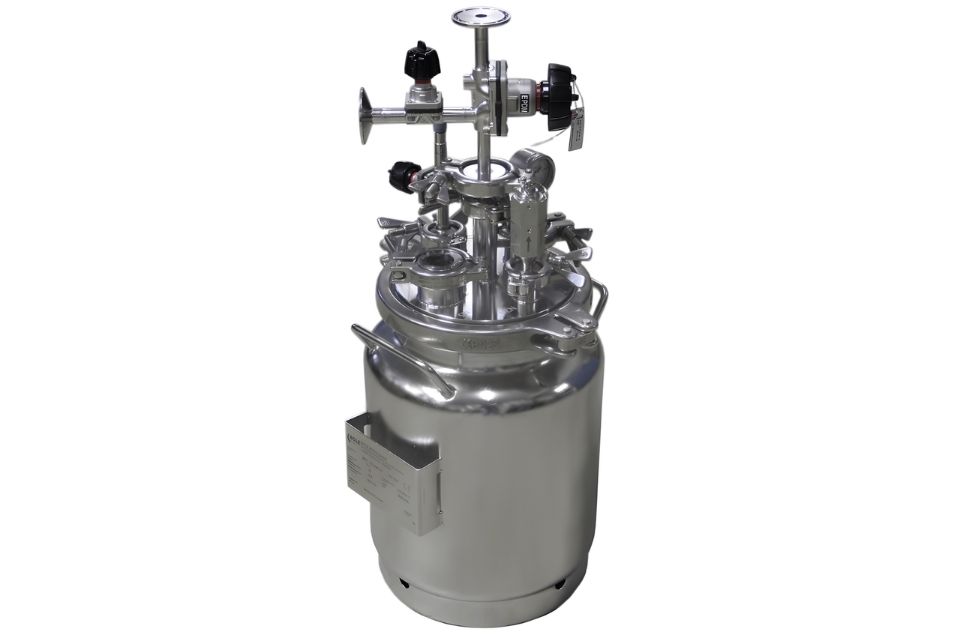
Pressure vessel
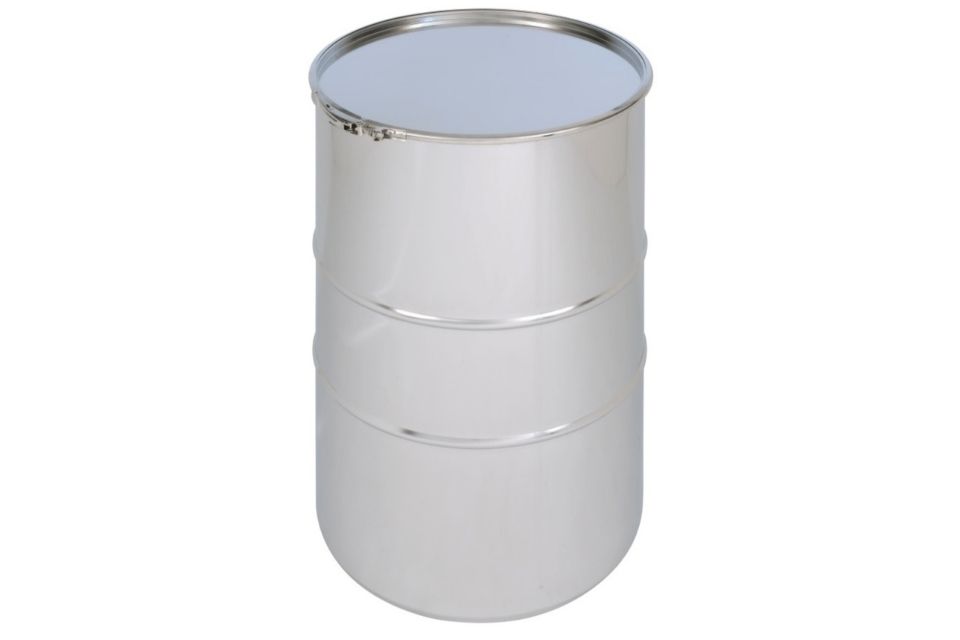
Stainless steel drums

Agitator tank

Special constructions
Edelstahlbehälter für Anlagenbau & Engineering –
zuverlässig in jeder Projektphase
In enger Abstimmung mit Ihnen übernimmt unser Projektteam Teile Ihres Auftrags. Von der Konzeption und Konstruktion, über die pünktliche Produktion und Lieferung von Behältern, Apparaten und anderen Komponenten, bis hin zu deren Inbetriebnahme. Mit unserer langjährigen Erfahrung und Kompetenz in der Verarbeitung von Edelstahl, können wir Ihnen als Projektierer-Planer zuverlässig ein breites Spektrum an Leistungen im Anlagenbau anbieten.
Design phase
- Needs analysis & requirements definition: Determination of the specific requirements of the project by the customer and definition of the project objectives.
- Feasibility study: Assessment of the technical and economic feasibility of the project, detailed project planning and budgeting.
- Concept design: Development of a design for the production plant/components, taking into account the specific requirements of the project.
- Design Qualification (DQ): Verification and documentation that the design of the equipment / components meets all specified requirements and regulatory requirements. BOLZ INTEC ensures that stainless steel tanks, equipment and other components meet the design requirements.
Implementation phase
- Ordering & production: Placement of orders by you and supervision of production according to the specific project requirements by BOLZ INTEC.
- Factory Acceptance Test (FAT): Inspection and acceptance of the finished system / components at the BOLZ INTEC factory to ensure that all specifications and requirements are met before the system is delivered to the installation site.
- Installation Qualification (IQ): Validation by BOLZ INTEC that the system meets the design specifications and has been installed correctly.
- Operational Qualification (OQ): Testing and verification of the system under operating conditions to ensure that it functions as planned.
- Performance Qualification (PQ): Validation of the entire system through test runs under real production conditions.
- Site Acceptance Test (SAT): Final inspection and acceptance of the system by the customer on site. BOLZ INTEC ensures that all components function properly and meet the specifications.
Operating phase
- Maintenance & support: Provision of maintenance and servicing services to ensure smooth operation of the system/components in the long term.
- Repair: Provision of services for the repair of systems / components.
Certifications
Quality assurance
DIN EN ISO 9001:2015-11
Certification
DIN EN ISO 3834-2:2021-08
Certification
DIN EN ISO 15085-2/CL1
Process tests
DIN EN ISO 15614-1 + AD-Merkblatt HP 2/1
Work tests
AD2000-HP 5/2
Specialist company
WHG §19/1
Operator tests
DIN EN ISO 14732:2013-12 + AD 2000 HP3
Pressure Equipment Directive
2014-68-EU/AD-2000 HPO
Intern. Welding engineers
DVS/IIW 1170
Welding tests
DIN EN ISO 9606-1:2017-12 + DIN EN ISO 9606-4:1999-06 for 1.4301 AISI 304, 1.4404 AISI 316L, 1.4435, 1.4539 + Hastelloy 2.4392 / C22
Module A2 Pressure vessel
Penetrant testing (PT)
DIN EN ISO 9712:2021-02

Services für Projektierer-Planer & Engineering-Unternehmen

Technical advice & design

Quality assurance
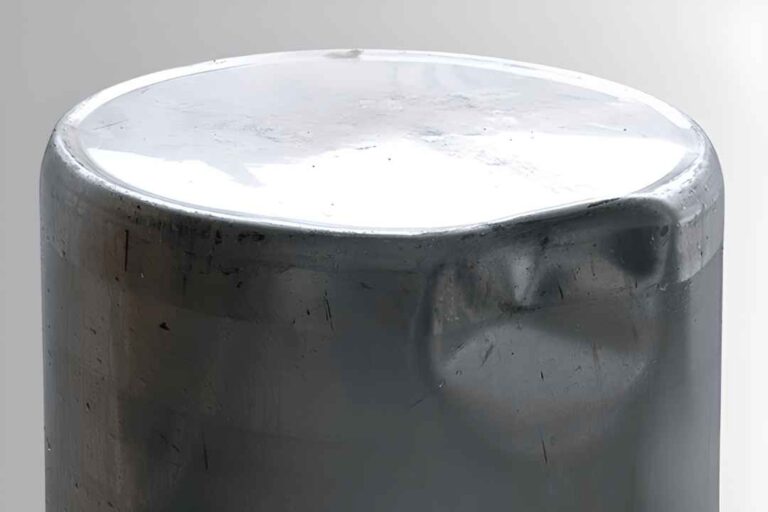
Refurbishing / barrel repair
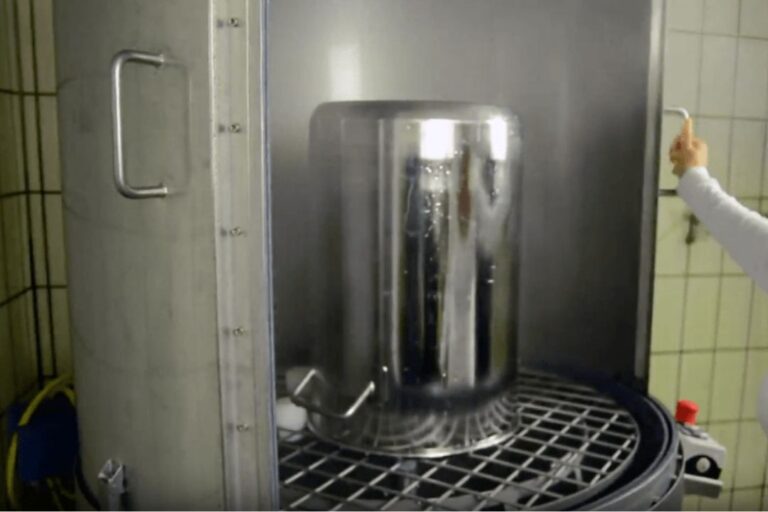
Simoflex® drum wash
Edelstahlbehälter Anlagenbau für Pharma, Spezialchemie, Kosmetik & Biotech: planbar, dokumentiert & prozesssicher
Unterstützung in jeder Projektphase
BOLZ INTEC unterstützt Engineering-Partner, Projektierer und Planer von der Entwurfsphase bis zur Umsetzung und Betriebsphase. Dazu gehören Anforderungsdefinition, technische Machbarkeitsbewertung, Konzeptentwicklung, Konstruktion, Fertigung, Lieferung und auf Wunsch auch Unterstützung bei Inbetriebnahme, Instandhaltung oder Reparatur. So erhalten Anlagenbauer mehr als einen Lieferanten: einen belastbaren Projektpartner für komplexe Edelstahlbehälter, Apparate und Konstruktionen.
Technische Integration in Anlagenkonzepte
Engineering Edelstahlbehälter für komplexe Anlagenbau-Projekte müssen sich präzise in neue oder bestehende Anlagen integrieren lassen. BOLZ INTEC stimmt Behälter, Apparate und Komponenten auf Medium, Prozess, Einbausituation, Schnittstellen, Anschlüsse und regulatorische Anforderungen ab. Dadurch entstehen Lösungen, die nicht isoliert betrachtet werden, sondern als funktionaler Bestandteil des gesamten Anlagenkonzepts geplant und gefertigt werden.
Projektspezifische Fertigung
BOLZ INTEC fertigt Edelstahlbehälter, Druckbehälter, Rührwerksbehälter, Edelstahlfässer, Apparate und Sonderkonstruktionen nach Kundenspezifikation. Für Engineering- und Anlagenbau-Projekte bedeutet das: Geometrie, Werkstoff, Oberfläche, Zubehör, Dokumentation und Ausführung können projektspezifisch abgestimmt werden. Auch komplexe Sonderlösungen lassen sich so passgenau auf sensible Produktionsprozesse in Pharma, Kosmetik, Biotechnologie oder Spezialchemie auslegen.
Qualitätssicherung & Dokumentation
Im Anlagenbau sind Qualität, Rückverfolgbarkeit und Dokumentation entscheidend. BOLZ INTEC verfügt über umfangreiche Zertifizierungen, Verfahrensprüfungen, Schweißerprüfungen, Druckgerätekompetenz und QS-Prozesse. So können Anlagenbau Edelstahlbehälter und Apparate mit den erforderlichen Nachweisen gefertigt und dokumentiert werden – eine wichtige Grundlage für Design Qualification, Factory Acceptance Test und die spätere Integration in regulierte Anlagenumgebungen.
Hygienische & regulierte Prozessumgebungen
Edelstahlbehälter für Anlagenbau, Apparate und Sonderkonstruktionen von BOLZ INTEC sind für hygienische & regulierte Produktionsumgebungen ausgelegt. Sie unterstützen GMP- und EHEDG-konforme Anlagenkonzepte und eignen sich für sensible Prozesse in Pharma, Kosmetik, Biotechnologie, Spezialchemie, Reinraum- und weiteren anspruchsvollen Industrien. Dadurch können Projektierer und Planer technische Anforderungen an Hygiene, Materialqualität und Prozesssicherheit frühzeitig berücksichtigen.
Effiziente Umsetzung durch Wertschöpfungstiefe
BOLZ INTEC bringt jahrzehntelange Erfahrung im Behälterbau, in der Edelstahlverarbeitung und in der Umsetzung komplexer Projektanforderungen ein. Durch technische Beratung, Konstruktion, Fertigung, Qualitätssicherung, Logistik und Instandsetzungsservices aus einer Hand lassen sich Abstimmungen vereinfachen und Projektabläufe effizienter gestalten. Das unterstützt Engineering-Unternehmen und Anlagenbauer besonders in zeitkritischen oder technisch anspruchsvollen Projektphasen.
Case study 1
Increase in production capacity for sterile insulin preparations in compliance with the highest hygiene standards
Provision of customized stainless steel containers & apparatus for insulin production
Task
A leading pharmaceutical company specializing in the production of sterile insulin preparations was faced with the challenge of expanding its production capacity. The existing stainless steel containers and equipment could no longer meet the increasing requirements and strict hygiene and safety standards. There was an urgent need for a customized and reliable solution.
Implementation
As a project partner, BOLZ INTEC worked closely with the renowned engineering service provider to develop an optimal solution. By providing several hundred 200 liter ⌀ 560mm lidded drums and matching accessories made of high-alloy and low-ferrite stainless steel 1.4435 (AISI 316L), which were precisely matched to the specifications of the pharmaceutical company, BOLZ INTEC was able to make a significant contribution to the timely implementation of the new plant and the smooth start of production. The state-of-the-art welding techniques used and the final electropolishing ensured a high surface quality of ' 0.5 µm and a high level of product purity, which is essential for the production of sterile insulin preparations.
Result
The pharmaceutical company was able to successfully expand its production capacities and comply with all hygiene and safety standards. The customized stainless steel containers and equipment from BOLZ INTEC helped to increase production efficiency and ensure product quality. Thanks to the comprehensive services provided by BOLZ INTEC, including technical advice, TÜV inspections, hazardous goods approvals, logistics and extensive documentation 3.1, the project was implemented quickly, smoothly and reliably. This resulted in significant economic benefits and enabled the company to consolidate its excellent market position.
Switch to efficient production of hyaluronic acid with API
Task
An international cosmetics manufacturer specializing in the production of hyaluronic acid with active pharmaceutical ingredient (API) needed a solution to optimize its production processes. The existing production facilities were no longer efficient and frequent production interruptions led to considerable costs and delays. As part of the new solution, the high purity and stability requirements of the product had to be guaranteed.
Implementation
BOLZ INTEC was commissioned as the central project partner to design and install a suitable production line made of high-quality stainless steel components. BOLZ INTEC planned and designed the new system in close cooperation with a leading engineering service provider. The use of specially developed pressure vessels 20 liters ⌀ 560mm and piping with low particle adhesion ensured smooth and hygienic production, especially for viscous media. The components made of particularly high-quality chromium- and nickel-rich stainless steel 1.4539 (AISI 904L) provided the necessary corrosion and acid resistance and enabled product purity, which is crucial for the production of hyaluronic acid with API active ingredient.
Result
The new production line led to a significant increase in efficiency and productivity. The cosmetics manufacturer was able to reduce production costs and improve the quality of its hyaluronic acid products. The components supplied by BOLZ INTEC helped to exceed the industry's strict hygiene requirements and minimize production interruptions. Thanks to BOLZ INTEC's comprehensive services, including technical advice, TÜV inspections, hazardous goods approvals and logistics, the implementation of the project was faster and more reliable. The cosmetics manufacturer was able to strengthen its market position and achieve decisive economic advantages.
Case study 2
Optimization of production processes & improvement of product quality in the production of hyaluronic acid
Case study 3
Increasing production capacity & ensuring product purity in vaccine production
Replacing existing systems with modern stainless steel solutions
Task
A biotechnology company specializing in the production of vaccines was faced with the challenge of increasing its production capacity while ensuring the purity and quality of its products. The existing facilities could no longer meet the increasing requirements and strict quality standards.
Implementation
The use of stainless steel with added molybdenum 1.4404 (AISI316L) in areas in contact with the product and stainless steel 1.4301 (AISI304) in areas not in contact with the product ensured corrosion resistance and high chemical compatibility, which is crucial for the production of vaccines. The supplied V30/Ø315 bung drums and the matching accessories, e.g. asymmetric funnels and special funnels with individual angles, were specially manufactured to meet the high purity requirements of vaccine production and at the same time significantly increase production efficiency.
Result
The biotechnology company was able to significantly increase its production capacity and improve the purity and quality of the vaccines produced. The new stainless steel equipment from BOLZ INTEC enabled safe and efficient production, resulting in improved product quality and higher customer satisfaction. Thanks to BOLZ INTEC's comprehensive services, including technical advice, TÜV inspections and logistics, the implementation of the project was fast, smooth and reliable. The partnership with BOLZ INTEC gave the company a decisive competitive advantage in the biotechnology and pharmaceutical industry.
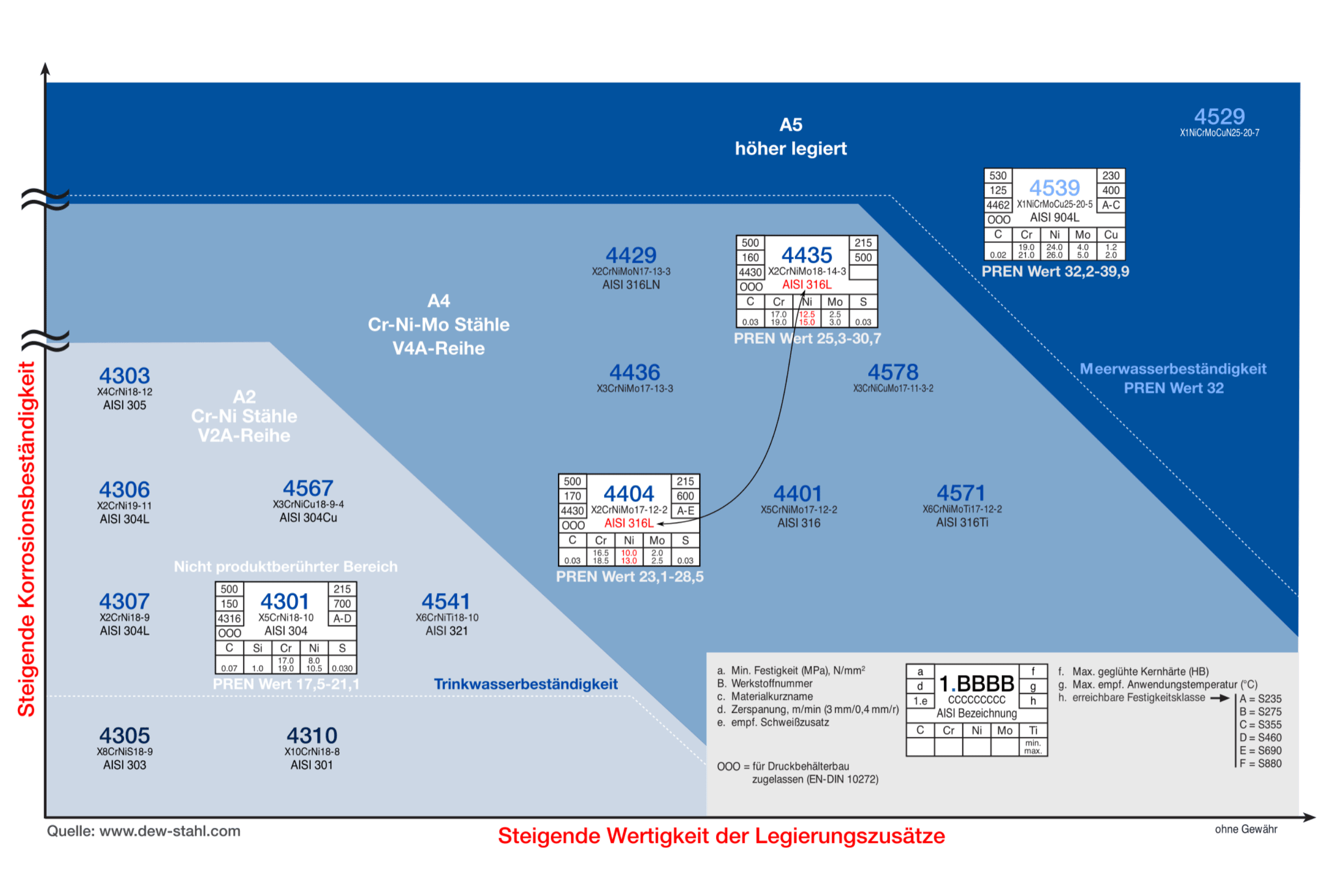
Materials for stainless steel containers & appliances
1.4301 (AISI 304)
Corrosion-resistant austenitic steel, versatile, good weldability, suitable for chemical and food applications.
1.4404 (AISI 316L)
Austenitic steel with added molybdenum for high corrosion resistance and good weldability, versatile in use.
1.4435 (AISI 316L)
Austenitic steel with increased molybdenum content and low ferrite content (' 3 %) for improved corrosion resistance and higher resistance to pitting.
1.4539 (AISI 904L)
Heat-resistant, high-alloy steel with increased chromium and nickel content, excellent resistance to acids and corrosion at high temperatures.
2.4602 Hastelloy C22
High-alloy nickel-chromium-molybdenum steel, excellent corrosion resistance to aggressive media such as acids, chlorine and oxidizing substances.
Special materials
In addition to the materials mentioned, BOLZ INTEC also processes other materials, depending on the customer's specifications and requirements.
Surfaces for stainless steel containers & appliances
Mill finish / 2B
Standard surface after rolling, uniform smoothness and roughness for a wide range of applications.
Brushed
Matt finish thanks to brushing, increased scratch resistance, ideal for aesthetic and functional applications.
Ground up to
Ra ' 0.4 µm
Fine, even surface, especially for applications with high purity requirements and aesthetic demands.
Electropolished up to
Ra ' 0.25 µm
High-gloss finish thanks to electrochemical polishing, maximum corrosion resistance and surface cleanliness.
OGF process up to
Ra ' 0.05 µm
Optimized Grind Finishing is a process developed by BOLZ INTEC and the University of Constance for minimal particle adhesion.
Optimized Grind Finishing® für Edelstahlbehälter & Apparate im Anlagenbau
Für Engineering-Unternehmen, Anlagenbauer, Projektierer und Planer sind Edelstahlbehälter nicht nur einzelne Komponenten, sondern Teil eines technischen Gesamtsystems. Entscheidend sind daher klare Spezifikationen, reproduzierbare Qualität, mediengerechte Auslegung, saubere Dokumentation und eine zuverlässige Integration in den geplanten Prozess.
Das von BOLZ INTEC gemeinsam mit der Hochschule Konstanz entwickelte Optimized Grind Finishing®-Verfahren, kurz OGF, bietet hierfür einen klar definierbaren Oberflächenvorteil. Produktberührende Edelstahlflächen können auf besonders geringe Partikel- und Produktrückstände ausgelegt werden – mit Oberflächenqualitäten bis Ra Warum Engineering-Unternehmen auf BOLZ INTEC setzen 0,05 µm. Damit wird OGF zu einer technischen Option für Projekte, in denen Reinigung, Restentleerung, Chargenwechsel oder Produktausbeute bereits in der Planungsphase berücksichtigt werden müssen.
Besonders relevant ist das für Anlagen in Pharma, Kosmetik/Naturkosmetik, Spezialchemie und Biotechnologie. Dort beeinflusst die Oberflächenqualität nicht nur den Betrieb des einzelnen Behälters, sondern auch Reinigungsstrategien, Prozesszeiten, Schnittstellenplanung und langfristige Anlagenverfügbarkeit.
Für Planer und Anlagenbauer bietet OGF einen zusätzlichen Vorteil: Die Oberflächenanforderung kann frühzeitig projektspezifisch definiert, mit Werkstoff, Geometrie, Anschlüssen und Reinigungsanforderungen abgestimmt und in die technische Auslegung übernommen werden. So unterstützt BOLZ INTEC Engineering-Projekte mit Behälterlösungen, die konstruktiv, werkstoffseitig und oberflächentechnisch auf den Prozess abgestimmt sind.

Planbare Oberflächenqualität
OGF kann als projektspezifische Oberflächenanforderung in die technische Auslegung einbezogen werden.
Für anspruchsvolle Prozessanlagen
Relevant bei Anlagen für Pharma, Kosmetik, Spezialchemie und Biotechnologie.
Weniger Restanhaftung
Produktberührende Edelstahlflächen können mithilfe des Optimized Grind Finishing®-Verfahrens auf reduzierte Partikel- und Produktrückstände ausgelegt werden.
Unterstützung bei Reinigungskonzepten
Eine anhaftungsarme Oberfläche kann CIP-/SIP-, Reinigungs- und Folgeprozesskonzepte unterstützen.
Saubere Schnittstelle für Engineering
Werkstoff, Geometrie, Anschlüsse, Oberfläche und Dokumentation können gemeinsam projektspezifisch abgestimmt werden.
Our project team looks forward to hearing from you
Sie haben Fragen zu unseren Produkten und Leistungen im Bereich Engineering oder möchten von einem unserer kompetenten Mitarbeiter beraten werden?
Give us a call or send us an e-mail. We will make time for you and will be happy to call you back if you wish.
You ask, we answer
BOLZ INTEC fertigt Edelstahlbehälter für Anlagenbau in kundenspezifischer Ausführung. Dazu zählen unter anderem Druckbehälter, Rührwerksbehälter, Prozessbehälter, Edelstahlfässer sowie komplexe Sonderkonstruktionen für sensible Produktionsumgebungen. Diese Edelstahlbehälter für Anlagenbau werden exakt auf Medium, Prozessparameter, Einbausituation und regulatorische Anforderungen abgestimmt. So entstehen Anlagenbau Edelstahlbehälter, die sich technisch präzise in neue oder bestehende Produktionsanlagen integrieren lassen.
Anlagenbau Edelstahlbehälter für Pharma, Kosmetik und Biotechnologie müssen hohe Anforderungen an Hygiene, Materialqualität, Korrosionsbeständigkeit, Reinigbarkeit und Prozesssicherheit erfüllen. In vielen Fällen kommen zusätzlich dokumentationsbezogene und regulatorische Anforderungen hinzu, etwa im Hinblick auf GMP-gerechte Prozesse, qualitätsrelevante Prüfungen oder validierbare Reinigungskonzepte. Deshalb werden Edelstahlbehälter für Anlagenbau in diesen Branchen nicht als Standardlösung betrachtet, sondern individuell auf Produkt, Prozess und Umfeld abgestimmt. BOLZ INTEC entwickelt Anlagenbau Edelstahlbehälter für genau diese sensiblen Einsatzbereiche und berücksichtigt dabei sowohl technische als auch regulatorische Rahmenbedingungen.
Ja, BOLZ INTEC unterstützt Projektierer und Planer bereits in frühen Projektphasen. Gerade bei Edelstahlbehälter Anlagenbau-Projekten ist es sinnvoll, Anforderungen früh sauber zu definieren, um spätere Schnittstellenprobleme, Anpassungen oder Verzögerungen zu vermeiden. Wir begleiten unsere Kunden bei der technischen Abstimmung, bei konstruktiven Fragestellungen und bei der Vorbereitung auf qualitätsrelevante Projektphasen. So entstehen Edelstahlbehälter für Anlagenbau, die funktional, wirtschaftlich und regulatorisch sicher ausgelegt sind.
Die Edelstahlbehälter für Anlagenbau von BOLZ INTEC eignen sich besonders für Branchen mit hohen Anforderungen an Hygiene, Materialqualität und Prozesssicherheit. Dazu gehören vor allem Pharma, Kosmetik, Biotechnologie, Spezialchemie sowie weitere sensible Industriebereiche. In diesen Branchen müssen Anlagenbau Edelstahlbehälter nicht nur robust und langlebig sein, sondern auch eine hohe Reinigbarkeit, dokumentierte Fertigung und zuverlässige Performance im laufenden Betrieb gewährleisten. Genau dafür entwickelt BOLZ INTEC kundenspezifische Lösungen.
Edelstahlbehälter Anlagenbau bieten gegenüber Kunststoffbehältern mehrere entscheidende Vorteile. Sie sind mechanisch belastbarer, temperaturbeständiger und widerstandsfähiger gegenüber vielen Reinigungsmedien und Prozessbedingungen. Zudem lassen sich Edelstahlbehälter für Anlagenbau hygienisch auslegen, sehr gut reinigen und langfristig wirtschaftlich betreiben. Besonders in regulierten Branchen sind Engineering Edelstahlbehälter deshalb oft die robustere und nachhaltigere Lösung, wenn Prozesssicherheit, Standzeit und Oberflächenqualität im Vordergrund stehen.
Detaillierte Einblicke in die Thematik gibt auch unser Whitepaper Edelstahl vs. Kunststoff, dass Sie hier downloaden können.
Stainless steel is extremely resistant to aggressive chemicals and can withstand high temperatures without losing its structural integrity. Plastic, on the other hand, can be attacked by chemicals and tends to deform or melt at high temperatures.
Wenn Edelstahllegierungen bei kritischen Anwendungen an ihre Grenzen stoßen, bietet BOLZ INTEC alternativ auch Hastelloy C22 als Material an.
Edelstahl ist ein extrem robustes und widerstandsfähiges Material, das eine längere Lebensdauer aufweist als Kunststoff. Es ist weniger anfällig für Risse, Verformungen und Abnutzung, was die Gesamtkosten für Wartung und Ersatz reduziert. Ideal für Projektierer-Planer von Anlagen.
Einblicke in die Thematik gibt auch unser Whitepaper Edelstahl vs. Kunststoff, dass wir Ihnen zum Download anbieten.
BOLZ INTEC begleitet Kunden auch bei qualitätsrelevanten Projektphasen im Anlagenbau. Dazu gehört die Unterstützung bei Dokumentation, technischer Nachvollziehbarkeit sowie bei projektbezogenen Prüf- und Abnahmeprozessen. Gerade bei Projektpartner Anlagenbau Edelstahlbehälter-Anforderungen ist diese strukturierte Begleitung wichtig, um Komponenten sauber in das Gesamtkonzept einzubinden. Für Unternehmen, die Edelstahlbehälter für Anlagenbau in regulierten oder besonders sensiblen Produktionsumgebungen einsetzen, schafft das zusätzliche Sicherheit in der Umsetzung.